As a dentist, one of the questions I hear most from parents is:
"My child's teeth look crooked. Should we wait until they're older for braces?"
The answer isn't always straightforward.
Sometimes, crooked teeth are simply about how the teeth erupted. But in many children, the teeth are only part of the story. The way a child breathes, swallows, chews, and rests their tongue can also influence how their jaws and teeth develop.
This is where myofunctional therapy and clear aligners may sometimes work together, not to replace each other, but to address different parts of the problem.
Teeth Are Only One Piece of the Puzzle
Imagine trying to straighten a young tree while a strong rope keeps pulling it in the wrong direction.
You can straighten it temporarily, but unless the pulling force is removed, it may gradually lean again.
The same idea can apply to children's teeth.
If a child has habits such as:
- Mouth breathing
- Tongue thrusting
- Low tongue posture
- Thumb or finger sucking
- Incorrect swallowing patterns
These habits can continue placing pressure on the developing teeth and jaws.
While not every child with these habits will develop orthodontic problems, they can be contributing factors in some cases.
What Is Myofunctional Therapy?
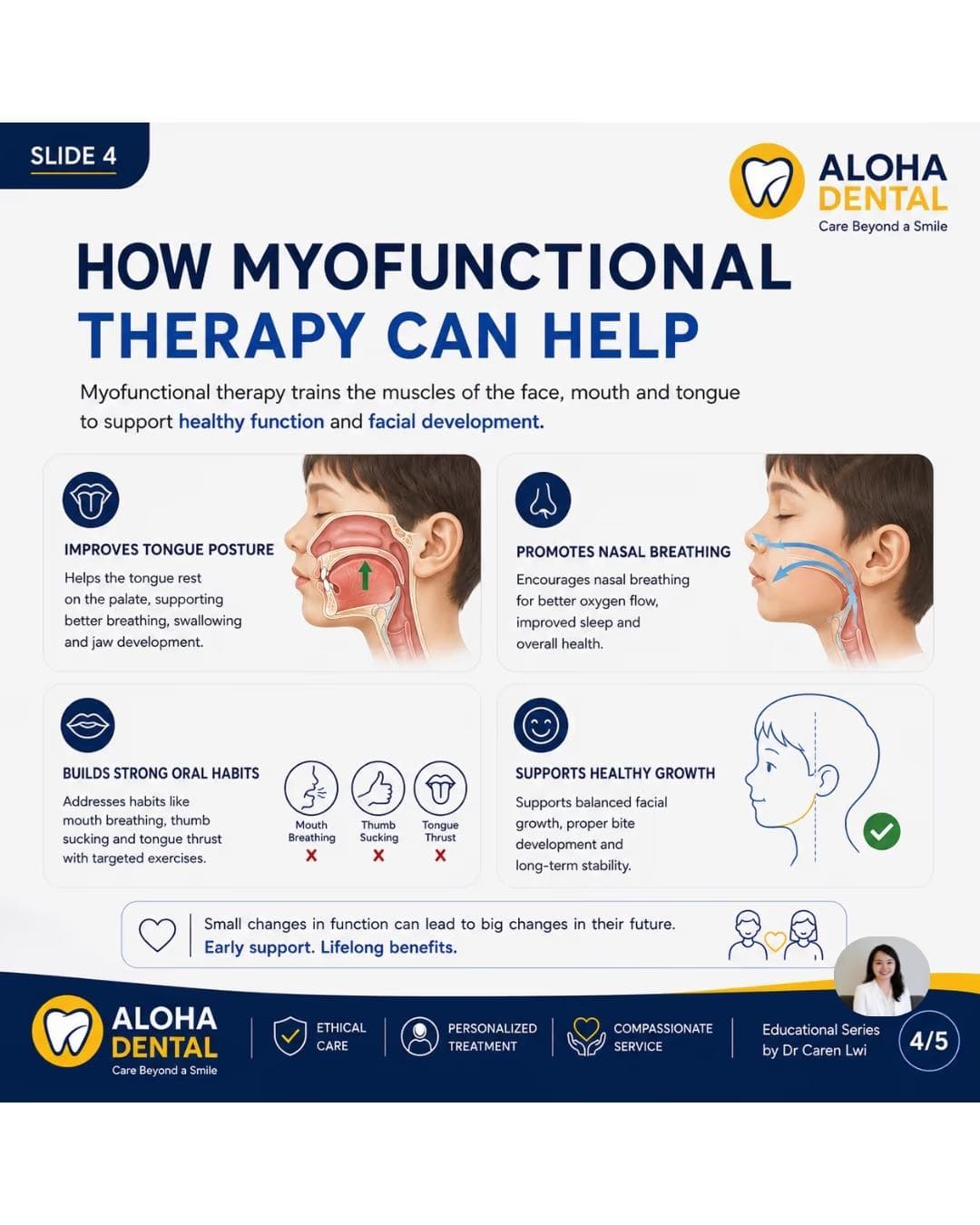
Myofunctional therapy is a series of exercises designed to improve how the muscles of the mouth and face work together.
The goal is to encourage healthier oral habits, such as:
- Keeping the lips comfortably closed at rest
- Resting the tongue against the roof of the mouth
- Breathing through the nose when appropriate
- Developing a more efficient swallowing pattern
These exercises are usually simple but require consistency at home.
Think of it as physiotherapy, but for the muscles involved in breathing, chewing, swallowing and speaking.
Appliances we may use include Myobrace and Myo Munchee, depending on the child's individual needs.
Where Do Clear Aligners Fit In?
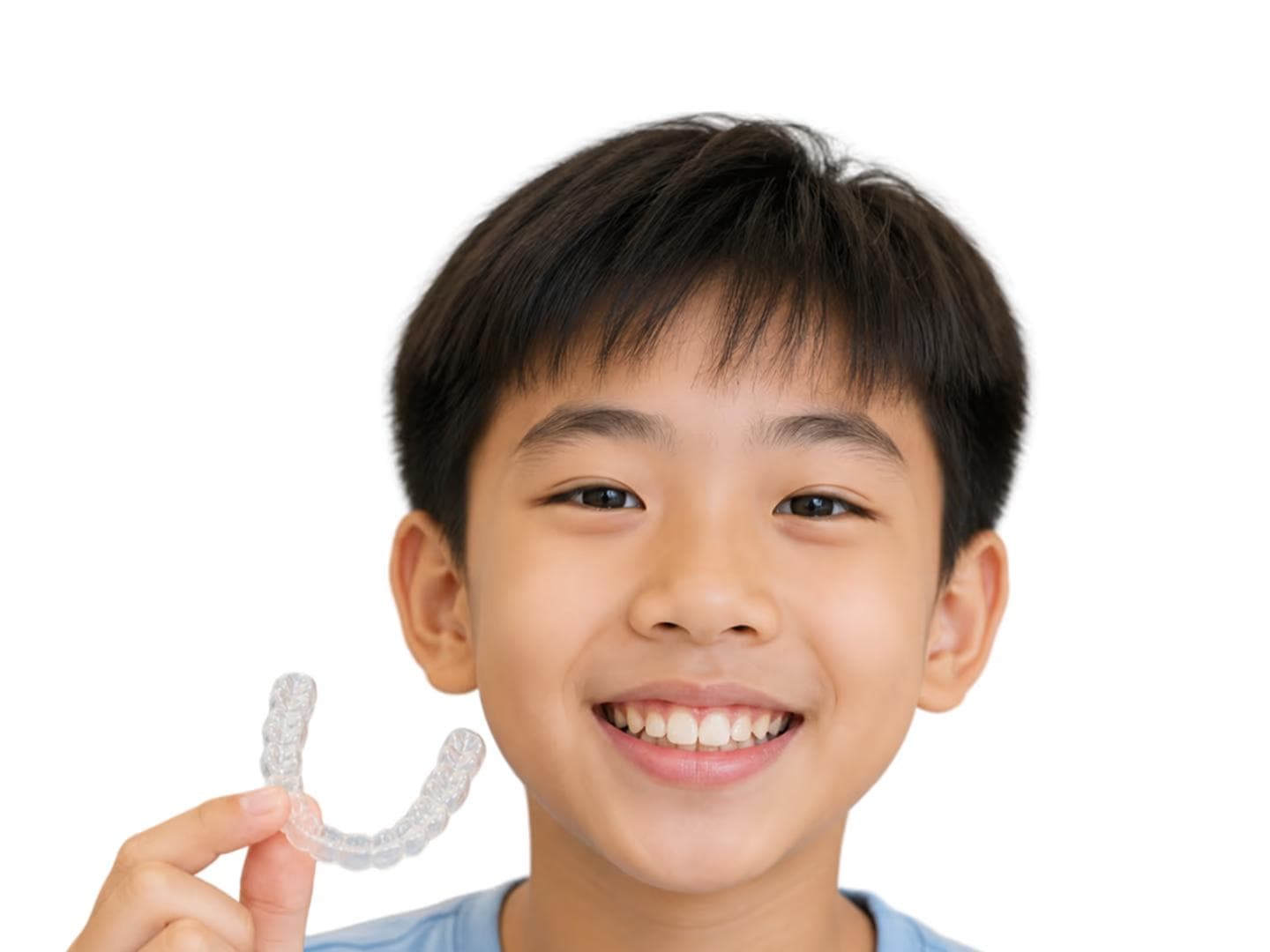
Many parents associate aligners with adults, but clear aligners can also be used for selected children and teenagers.
Depending on the child's stage of development, aligners may help:
- Create space for erupting permanent teeth
- Correct mild to moderate crowding
- Improve certain bite problems
- Guide teeth into healthier positions as the jaws continue developing
Because they are removable, children can continue brushing and flossing more easily compared to fixed braces,as long as they wear the aligners as instructed.
However, aligners are not suitable for every child, and some cases are better treated with other orthodontic appliances.
Why We Sometimes Combine Both
If we only move the teeth but ignore the underlying muscle habits, treatment may not be as stable over time.
On the other hand, if we only improve muscle function without correcting existing tooth positions, the bite may still need orthodontic treatment.
For suitable cases, combining aligners with myofunctional therapy allows us to address both:
- The teeth, using aligners to guide alignment.
- The muscles and habits, through myofunctional exercises.
This combined approach aims to support healthier oral development rather than focusing only on straighter teeth.
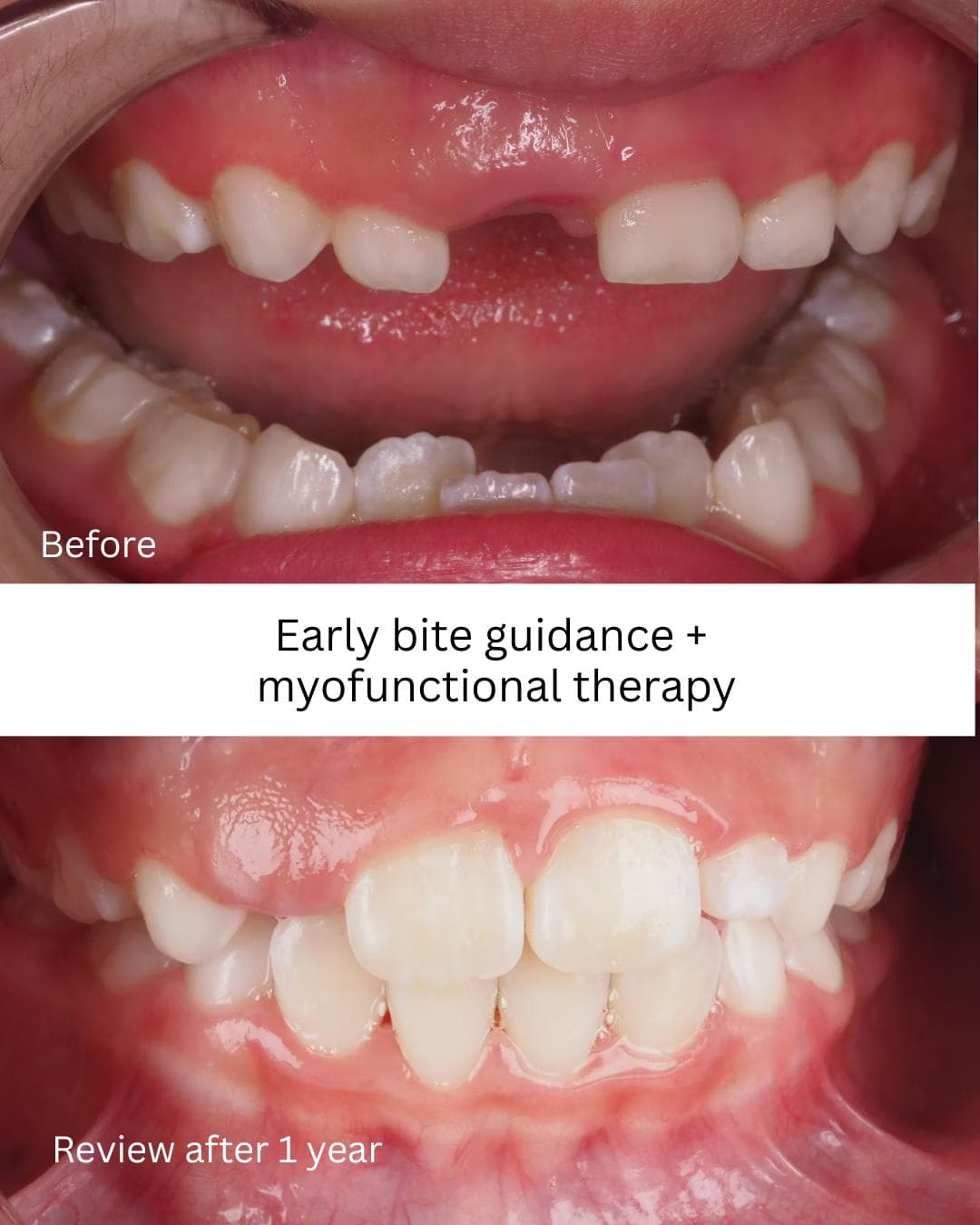
Every Child Is Different
One of the biggest misconceptions is that every child should start treatment as early as possible.
In reality, timing matters.
Some children benefit from early intervention, while others are better monitored until the right stage of growth.
During an assessment, we look beyond crooked teeth and consider:
- Facial growth
- Jaw development
- Bite relationship
- Airway and breathing habits
- Tongue posture
- Oral habits
- Stage of tooth eruption
Sometimes the best recommendation is simply to observe and review the child again in six to twelve months.
What Parents Can Watch For
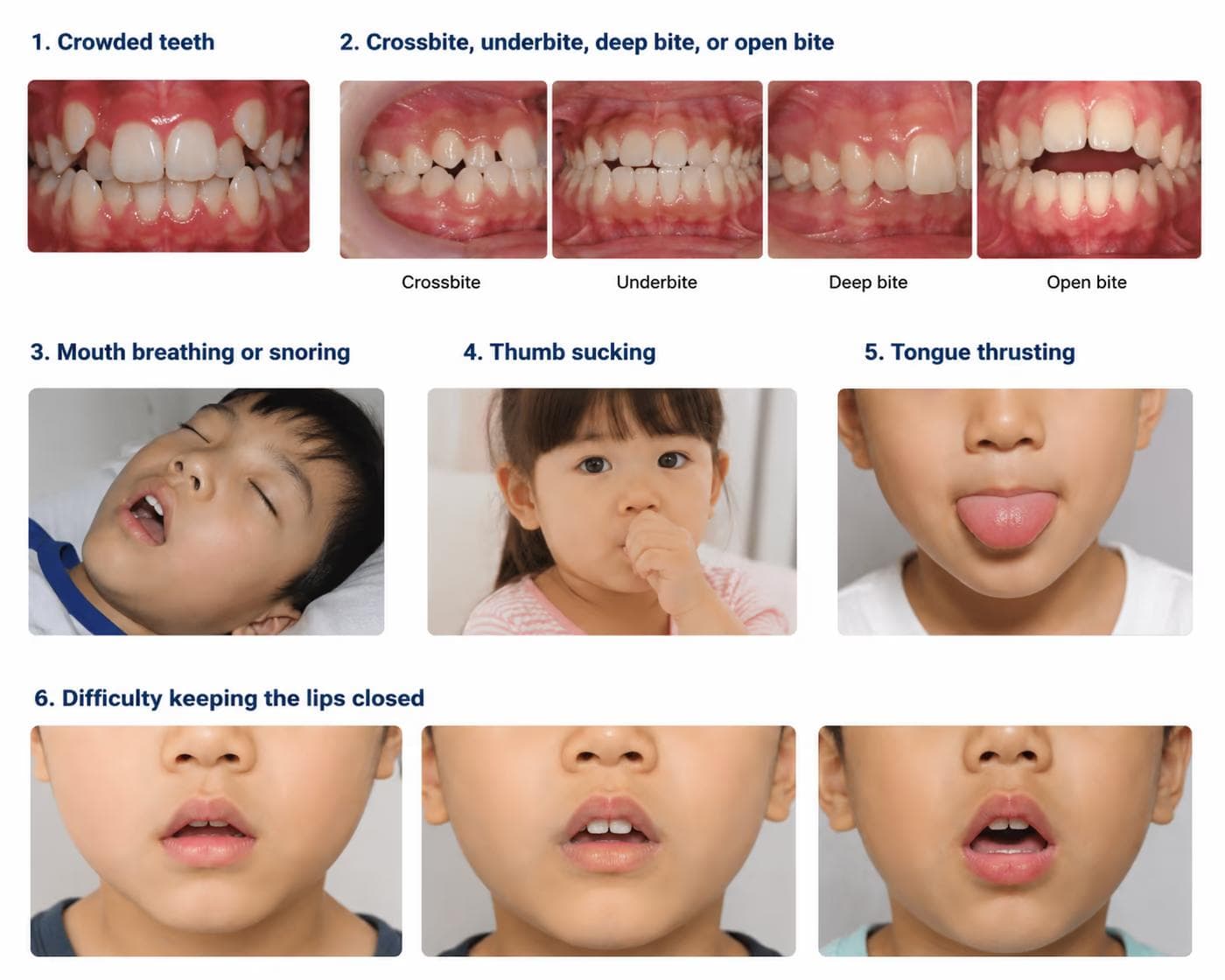
You may wish to have your child assessed if you notice:
- Teeth becoming crowded early
- Mouth breathing during the day
- Sleeping with the mouth open
- Snoring regularly
- Thumb sucking that continues beyond the toddler years
- Difficulty chewing certain foods
- A tongue that pushes between the teeth when swallowing
- Teeth that don't seem to fit together comfortably
These signs don't necessarily mean treatment is required, but they can be worth discussing with your dentist.
Our Philosophy at Aloha Dental JB
At Aloha Dental JB, we believe children's orthodontic care should never be about rushing into braces or aligners.
Our goal is first to understand why the teeth are developing the way they are.
Sometimes that means monitoring growth.
Sometimes it means starting myofunctional therapy.
Sometimes aligners are appropriate.
And sometimes a combination provides the most balanced approach.
Every child deserves a treatment plan that matches their individual needs rather than a one-size-fits-all solution.
Frequently Asked Questions
At what age should my child have their first orthodontic assessment?
The American Association of Orthodontists recommends a first orthodontic check-up no later than age seven. This does not mean treatment will necessarily begin at that age. Often, it simply allows growth to be monitored and concerns to be identified early.
Can my child wear aligners instead of braces?
Some children are suitable candidates for clear aligners, while others may benefit more from braces or other orthodontic appliances. The best option depends on the child's bite, age, growth stage and level of cooperation.
Does every child with crooked teeth need myofunctional therapy?
No. Myofunctional therapy is recommended only when there are functional habits or muscle patterns that may be contributing to the orthodontic problem. It is not necessary for every child.
Will correcting tongue posture straighten teeth by itself?
Usually not. Myofunctional therapy is designed to improve oral function and habits. Existing tooth positions often still require orthodontic treatment if alignment correction is needed.
How long does treatment take?
This varies depending on the child's growth, the complexity of the case and the type of treatment required. Some children only require monitoring, while others may benefit from treatment over several months or longer.
Looking Beyond Straight Teeth
Straight teeth are certainly important, but healthy growth involves much more than appearance alone.
When we understand how breathing, tongue posture, muscle function and tooth alignment work together, we can make more informed decisions about a child's developing smile.
If you're unsure whether your child's teeth are developing as expected, an assessment can help provide clarity and determine whether observation or treatment is the most appropriate next step.
References and further reading
- American Academy of Pediatric Dentistry: Management of the Developing Dentition and Occlusion in Pediatric Dentistry
- American Speech-Language-Hearing Association: Orofacial Myofunctional Disorders
- American Association of Orthodontists: Orthodontic FAQs
Disclaimer
This article is for general educational purposes and is not a substitute for professional dental or medical advice. Treatment suitability and timing depend on an individual assessment. Children with persistent mouth breathing, regular snoring or suspected airway concerns may also need assessment by an appropriate medical professional.
About the Author
Dr Caren Lwi Yee Chin, DDS (UKM), MFDS RCSEd, is a general dental practitioner with a special interest in preventive and interceptive dentistry. She is passionate about helping families make informed decisions through evidence-based oral health education.